

THE RESILIENT ONE
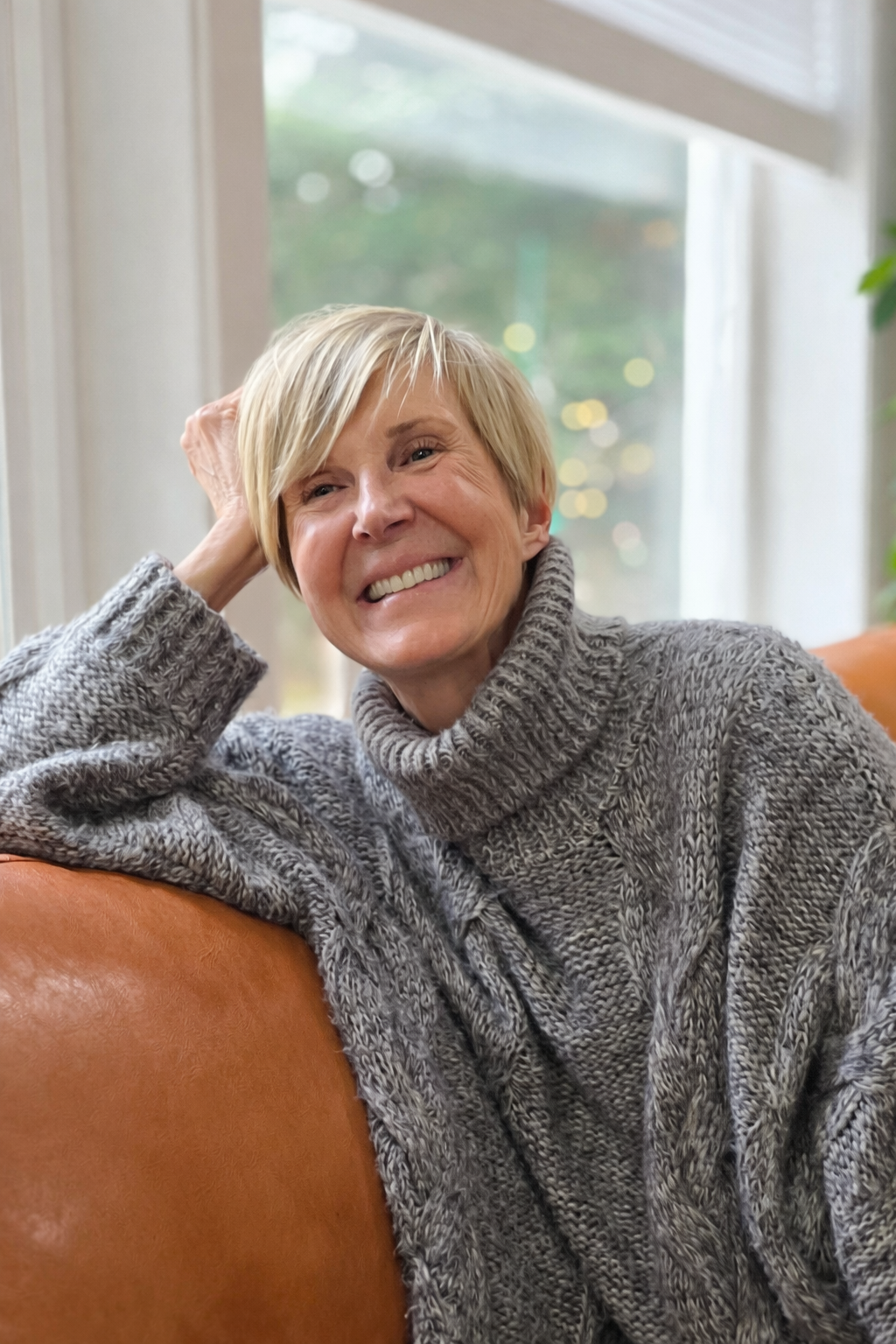
It happened organically. The best things in my life always do.
____________________________
I am not a “pick a word” person.
I avoid the gimmicks that circumvent deeper conversation — the ones that shift the countdown from sacred to superficial, asking us to believe it’s possible to condense a year into a single word.
And yet, the idea stayed with me.
Not as a task, but as a question.
And that question brought quiet memories to life. Like a conversation when someone wise once remarked, “God honors perseverance.” I felt it land deep in my soul.
I used to revere that word — perseverance.
I wore it as a badge of honor, visible and heavy around my neck.
It suited the determination rooted into the framework of how I had always defined myself:
Kansas farmgirl.
Depression baby by parental default.
White bread stacked in the middle of the table.
One-portion meals.
Work harder.
Act yourself into being loved.
Perseverance felt serious and important —
fixed, determined,
a furrowed brow,
a body braced against the world.
I see it now almost like a tumor inside me —
single-minded, forceful, consuming.
More about making life happen
than allowing it to unfold.
This was me.
And I was proud of it.
Until a few days ago, when someone gently stepped beyond the boundaries of my thinking and invited me to see myself through different eyes.
“You are resilient.”
The words were spoken lightly, almost playfully.
And in that moment, the scaffolding of striving I had organized my life around began to loosen.
The have-to’s and the must-be’s came tumbling down.
Resilient.
The word felt weightless —
the artistry of bringing lightness to a thing of gravity,
the ability to find lift
when life is pulling you down.
I received it as the truest description of who I am becoming.
To be free from cursing what is.
To be more student than victim.
To arrive at each lesson willing to say:
teach me, show me, change me.
If perseverance digs in and down,
resilience reaches out and up.
I see myself more clearly now —
this human who has carried Stage IV cancer for sixty months,
learning that revelation does not arrive all at once,
but unfolds step by step.
Resilience trusts that unfolding.
It rejects frenzy.
It resists the pressure of everything all at once.
It is agreement with life as teacher —
mixing longing with loss,
joy with heartache,
until even what hurts becomes nourishment
rather than depletion.
Resilience is finding my way in the dark —
the quiet awareness that even when I struggle to see myself,
I am still here.
It is not the hope that something good might happen,
but the steadiness of standing on ground
where goodness is already at work.
This is the foundation I have learned to trust —
the space between will and has,
where irreversible goodness
is already embedded in every hard thing.
How else could I be writing this
only hours after my last chemo drip —
enduring what is necessary,
grounded in what is?
This feels like the call of the New Year for me, not the other way around:
Not to brace.
Not to force.
Not to declare war
on my body,
or my life,
or circumstances I did not choose.
But to stand.
Upright.
Receptive.
Awake.
The truest battle I face is quieter than I ever imagined —
the daily temptation to abandon myself.
To harden.
To disappear.
To believe that suffering is the whole story.
Resilience stands against that.
Not with armor,
but with presence.
Anchored in truth.
Anchored in love.
Anchored in the quiet authority of staying.
Resilience
is not a personality trait, it is an outcome.
The natural result of a soul that keeps saying yes,
to revelation,
to presence,
to life as it is,
not as it should have been.
And here is the truth I couldn’t see before —
that nothing extraordinary was required of me.
No heroics.
No overcoming.
No victory march.
Only this:
that I stay.
That I remain with my life.
That I refuse to leave myself in the moments that ask the most of me.
This is resilience.
And this —
this way of standing,
still here,
still open,
still willing —
is how I enter the New Year.
NOTES: Forming a Resilient Life
Resilience is not born in a moment.
It forms over time — shaped by what we choose to cultivate, what we practice carrying, and what we refuse to abandon when things grow difficult.
As I’ve lived into it, resilience seems to take shape through a few interwoven ways of being. Not rules. Not formulas. But steady orientations that make it possible to remain present without being overtaken.
A Trusting Heart
At the center of a resilient life is a heart that has learned how to trust again.
Not because life has been gentle —
but because experience has revealed that hardness does not protect what openness preserves.
This trust is not naïveté.
It is courage shaped by disappointment and still willing to remain open.
A trusting heart does not deny pain or bypass grief.
It refuses only one thing: the belief that suffering gets the final word.
Over time, this trust begins to sound like a quiet agreement:
that life is still teaching
that God is still revealing
that even what arrives uninvited may carry wisdom
This is not bracing against life.
It is full presence — consent without self-abandonment.
A Prepared Mind
Resilience is not something we leave to chance or mood.
It is formed by the steady work of orientation — deciding, ahead of time, how we will meet what comes.
Preparation, here, is not control.
It is remembering.
Remembering truth when fear narrows vision.
Standing in the space between will and has without collapsing into urgency.
Allowing clarity to arrive in increments rather than demanding it all at once.
A prepared mind understands:
that revelation unfolds
that frenzy is not wisdom
that everything-now thinking erodes discernment
This preparedness shows itself quietly —
as steadiness,
as restraint,
as the capacity to remain present
when certainty is unavailable.
A Practiced Way of Staying
Resilience is not abstract.
It is practiced.
A resilient life is supported by skills — practiced over time — that make it possible to stay awake to life without being overtaken by it. These practices are simple, but they are not accidental.
They include:
regulating the breath when the body wants to panic
returning attention to the present moment when the mind rushes ahead
discerning what asks to be endured and what asks to be released
choosing meaning over immediate interpretation
tending the body as ally, not adversary
These practices do not eliminate fear.
They create readiness.
They allow openness without overwhelm.
Response instead of reaction.
Embodiment instead of escape.
This is not self-mastery for the sake of power.
It is self-stewardship for the sake of love.
And perhaps this is the quiet truth beneath it all:
Resilience is not about becoming someone new.
It is about forming the capacity to remain —
with honesty,
with steadiness,
with yourself —
when leaving would feel easier.