

CALL TO GRACE
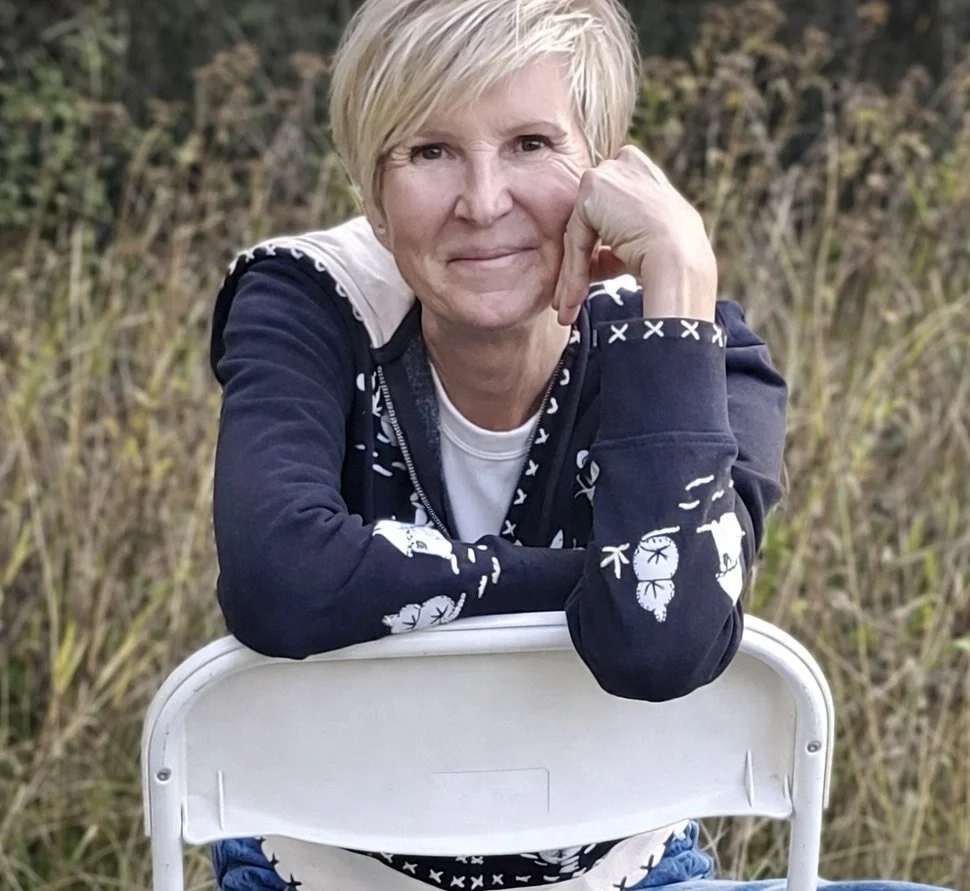
Sometimes we just need to know we are on someone’s radar.
____________________________
There is this eerie quiet that comes before the diagnosis, an interior and nearly unbearable test of patience enveloped within the information-gathering stage.
That quiet moment. Drawn out and longing in its need.
Between what didn’t work and the exploration of what comes next, finds me wondering if I have been forgotten. Silence is not my friend.
I wouldn’t call it fear, exactly.
It’s more a kind of awareness that I am about to step into something new.
I don’t know how it will meet me.
And for the first time in a long season, I didn’t try to answer the question alone.
So, I typed into my calendar, “Call to Grace.”
These three words. Intended to connect with my oncology nurse with this heavenly name.
As I typed, I was struck by the thought that what I’d just written in my calendar was not merely something [or someone] added to my schedule but a holy summons, straight from the Creator of all things.
Call…to grace.
In this particularly challenging season of my journey, I am clear about only one thing:
When it comes to healing, these things cannot exist simultaneously—
Believing that healing is mine to claim,
and identifying with the disease within me in any way.
This has nothing whatsoever to do with denial, but with the necessity to speak life in moments when the pull toward disappointment and the dramatic is the more natural response.
The hard moments we encounter have a life of their own. The shared humanity of what we go through is a beautiful thing.
But the healing that we crave doesn’t form in the commiserating. It forms in transcending grace.
Maybe grace is not only a pardon but a supernatural refusal to let difficulty have the final say.
Sometimes grace looks like—
Calling someone you trust before you spiral.
Letting yourself be instructed.
Receiving support without apology.
Asking for prayer instead of posturing certainty.
Being honest within chaos, concern, fatigue.
What if grace is not only what God extends to us, but what He teaches us to extend to ourselves—
To the unknown.
To the process.
To the version of us that is doing the best she can.
Not by removing the hard.
But by laying something over it—
Strength over fear.
Mercy over self-judgment.
Presence over abandonment.
Breath over panic.
Light over prognosis.
Companionship over isolation.
Grace as overlay. Grace as cover.
Grace as the thing that keeps life from becoming only about the hurt.
Is it possible that grace heals not only by changing circumstances, but by changing the internal climate in which they are endured?
Grace shifts how we carry what is hard.
And how we carry what is hard affects everything:
The nervous system.
Our relationships.
Even the body’s ability to heal.
Grace is what keeps difficulty from becoming our only reality. There is something profoundly human in that.
The willingness to say—
I don’t know.
Can you help me understand?
Can you tell me what this feels like from where you stand?
Can you stay with me while I step into this?
We don’t talk about this part enough.
The part where we let ourselves be seen
before we have it all together.
The part where we loosen self-sufficiency and seek support.
This is exactly what I had done. Not just called a nurse named Grace.
Not just gathered information…
I made a decision—quiet, but unmistakable—
to call on something beyond my own capacity.
Isn’t that one of the truest definitions of grace—
Help that arrives when we reach the edge of ourselves?
We’ve been taught to think of grace as something theoretical, even
theological. But what if grace is far more immediate than that?
What if grace is not only something we receive once, or once in a while, but something we live within every day?
Grace is not abstract.
It is experienced.
In the body.
In the nervous system.
In the way a moment shifts
when something steadies inside of it.
Grace is also something else.
It is what we extend to ourselves.
When the body is tired
and we stop demanding more from it than it can give.
When we don’t have the words
and we don’t force them.
When we feel uncertain
and we allow that to exist without rushing to resolve.
Grace is the refusal to meet our own humanity with harshness. This may be the most healing thing I have ever said.
And maybe even more than that—
Grace is what allows something difficult
to exist in our lives
without becoming the only thing that defines who we are.
Grace does not always remove what is hard.
But it does something equally powerful—
It lays over it, making healing possible
even when nothing has been resolved yet.
Healing does not begin
when everything is fixed.
And if that is true—
Then grace is not rare.
It is available
in every moment we stop demanding more from ourselves
than heaven does.
NOTES
There is a way of understanding grace
that keeps it distant.
Defined.
Contained.
Placed safely within theology.
And then there is a way of encountering it
that changes how a life is actually lived.
What if grace looks like:
Calling someone you trust
before your thoughts spiral into places you don’t need to go.
Letting yourself be instructed
instead of acting as if you already knew.
Receiving support
without apologizing for needing it.
Allowing your life to be held
instead of proving you can carry it alone.
What if grace is not passive?
What if it is active, responsive, present?
Not hovering somewhere above your life—
but entering directly into it.
Grace is not only pardon.
It is participation.
Not only the forgiveness of what has been done—
but the presence that meets us
in what we are currently carrying.
In this way, grace is not separate from healing.
It is the environment in which healing becomes possible.
“In my weakness, His grace is sufficient.”
—2 Corinthians 12:9
Reflections on Grace
When was the last time you reached for support
instead of trying to hold something alone?
Where in your life
are you asking more of yourself
than you would ever ask of someone you love?
What would it look like
to extend grace to your body
in its current state?
Where are you resisting help
that is already available to you?
What changes
when you stop trying to resolve something
and allow yourself to be supported inside it?
What if grace is not something you have to earn—
but something you can practice?
Where could you soften
without losing your strength?
And what might become possible
if you allowed grace
to meet you
exactly where you are?