

WHAT FALLS OUT
What we carry eventually asks to be released.
____________________________
It can happen in any neighborhood. It happened in ours last night.
First, it was the howls of a wolfhound in the bed just below me.
Then it was the wails of a woman in deep emotional turmoil on the streets.
Their pitch, matching. Their distress in unison.
I am awakened, not only because of another’s primal cries in the darkest night, but because of the needful voice going on from within. She has summoned what I sense: that all of us are holding it together. In one way or another—forced dignity or disenchantment written into our faces and sometimes pouring involuntarily out of the hole just above our chins.
I watch the flashing red lights streaming through my clear story windows, making what appear to be a fading homage to Christmas on my walls. She is safe. For the moment. And I lay my head back on my pillow to rest.
Yet, I am still haunted by what has transpired. In her. In me.
The liquid toxin transfused this morning, intended to hit a deadly target is doing its quiet, unrelenting job, enlivening all my senses to a fiery pitch. This is my superpower: Accessing the waste, making use of its biproduct for good. And so, I lay there, in the shadows of her distress.
And I ask—When have I [like her] been unable to contain the sadness that life hasn’t gone as it should?
My thoughts devolve to the cries of my own daddy that are [apparently] still living in my head. After all these years and thoughts suppressed…
“Help!” The disconcerting, unending and involuntary shouts of distress from a truly dignified man streamed through the corridors of a place in which I never expected he would live.
No amount of soothing could quiet the tumbledown—the loss of wife, then health, then little pieces of his mind, then grip.
I had, until this dark night, packed away these casualties of an otherwise glorious life well lived. But the cries, both realtime and summoned from the past, surround me and are in me as chemotherapy does its superpower trick.
I can see through the darkness like wild animals stocking their prey.
My life is my prey.
What I want that once was in my grasp.
What I crave that still is.
Like those faded red lights dancing on my walls, there is always help coming—
The soft breath of one sleeping beside me.
The unstoppable warriors who have committed to my journey through prayer.
The Spirit who guides me and nurtures me with glimpses of Heaven here on Earth.
The woman within me who manifests her goodness in spite of the hard.
We [all of us] are the resilient ones. The breathtaking makers of our own dancing shadows of light on walls, and in rooms where others move about stealthily, carrying their own tiny and immeasurable griefs within them as they smile.
What falls out of us. Ugly or beautiful. Both a statement and battle cry. We get to choose you and I.
May what falls out be something that edifies but doesn’t deny what we’ve been through, what we’re going through. So that who we meet is blessed by the authenticity of who we are—
“Look at how she carries herself.” Not pretend, but residual of the Spirit orchestrating the cadence within.
What falls out of us is what we absorb. Even the hard parts—
the cries of my daddy, his slow dissent, the chemotherapy and its toxins, the midnight wakeups—have something to give.
The grief pushing out and overflowing is healing. Its disposal gives the body room to expand.
I had the inclination to run to her at midnight in my torn t-shirt and flannel pants. But she was already well cared for. And in the end, I had my own interior to attend…working it through and out, until what remains this morning is this small written offering from heart to hands.
NOTES
When something breaks open in us — grief, fear, memory, sorrow — our instinct is often to shut it back down as quickly as possible. To smooth our faces. To regain composure. To move on.
But composure is not the same as healing.
What falls out of us under pressure is not random. It is information. It is history. It is the body releasing what it has been carrying longer than the mind remembers.
The question is not whether grief, fear, or memory will surface.
The question is whether we will meet what surfaces with judgment — or with care.
A few gentle anchors to sit with:
The body remembers before the mind is ready.
Sounds, images, and sensations can return without warning. This is not weakness. It is the nervous system completing unfinished work.Containment is not suppression.
Holding yourself with dignity does not require silencing what is true. What is expressed with care creates space. What is buried requires more energy to keep buried.What “falls out” is often asking to be witnessed, not fixed.
Tears, shaking, words spoken aloud — these are not signs that something is wrong. They are signs that something is moving.Release is not collapse.
Grief expressed is grief metabolized. Its release gives the body room to expand, soften, and breathe again.Not every call is ours to answer outwardly.
Sometimes the most faithful response is tending to our own interior — trusting that care is already present where it is needed.What we allow in shapes what comes out.
The stories we consume, the memories we avoid, the pain we name or refuse — all of it influences the cadence of what eventually emerges.
Questions for quiet self-evaluation:
What sounds, memories, or sensations return to me when I am tired or startled?
Where have I mistaken composure for healing?
What have I labeled as “too much” or “inappropriate” that may actually be asking for care?
When something spills out of me, do I rush to shut it down — or can I stay with it long enough to learn what it needs?
Who in my life is meant for soothing, protection, or listening — and do I allow them to show up?
A final thought to carry with you:
Grief that is allowed to move does not weaken us.
It refines us.
What falls out of us — ugly or beautiful — is not a failure of strength. It is evidence of life still working, still healing, still making room.
May what comes out of us be honest enough to heal, and gentle enough to bless — both ourselves and those we meet along the way.
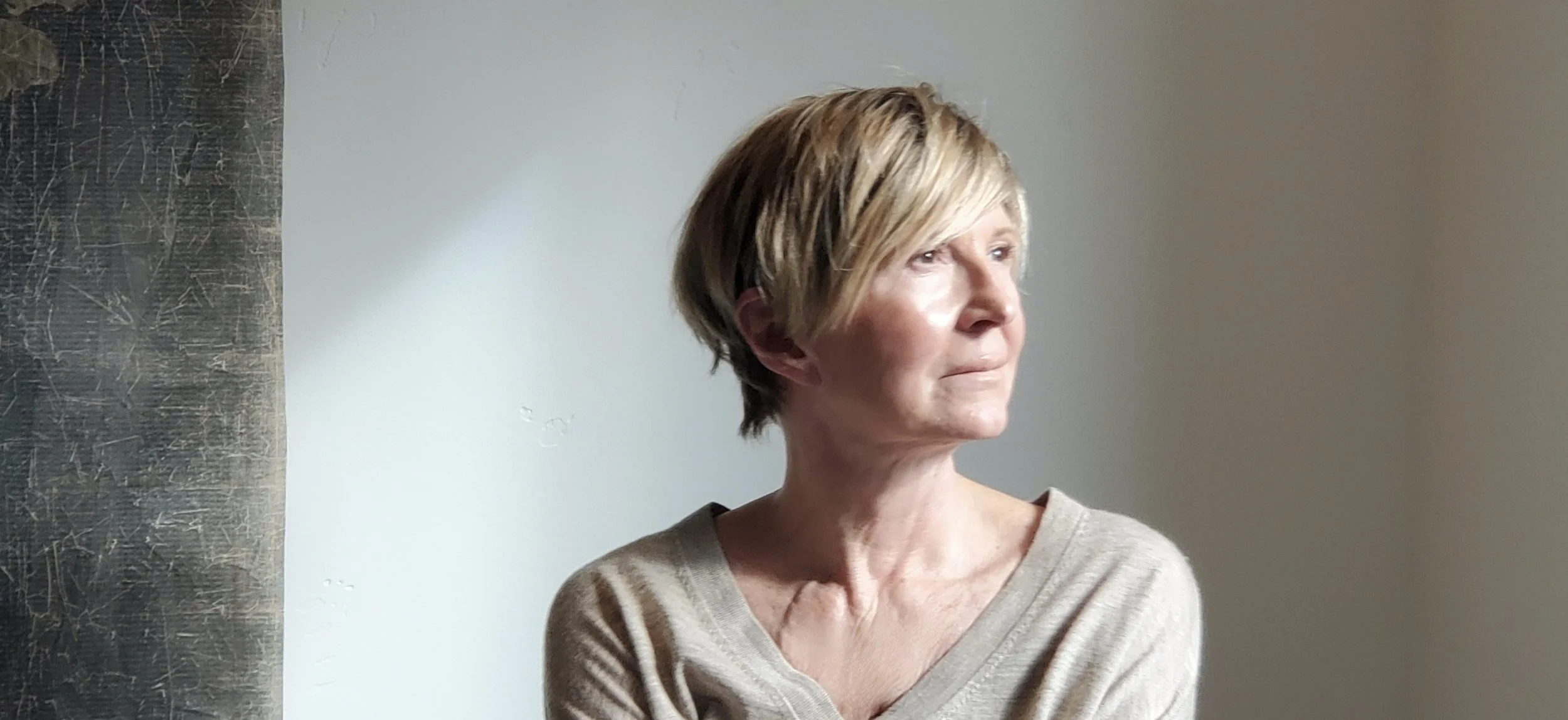
Image: This is a little corner of my office, just across from my desk. When I find I can’t finish a sentence, I leave the laptop and let the view do the rest.
I cropped the image long and open to make space for thoughts, words—and then for you. Because what you bring to what I say is always in my head.