
LOOK WHAT LIVED
Neglect is the practice of turning away from the truth we quietly whisper to ourselves.
____________________
The revelation came that I had become obsessed with killing.
At every step I have agreed to the carnage as a necessary exchange for life.
This is not a me condition but a human condition.
No, it’s bigger than that.
It’s a Creation condition wrapped around perpetual seasons of death and life.
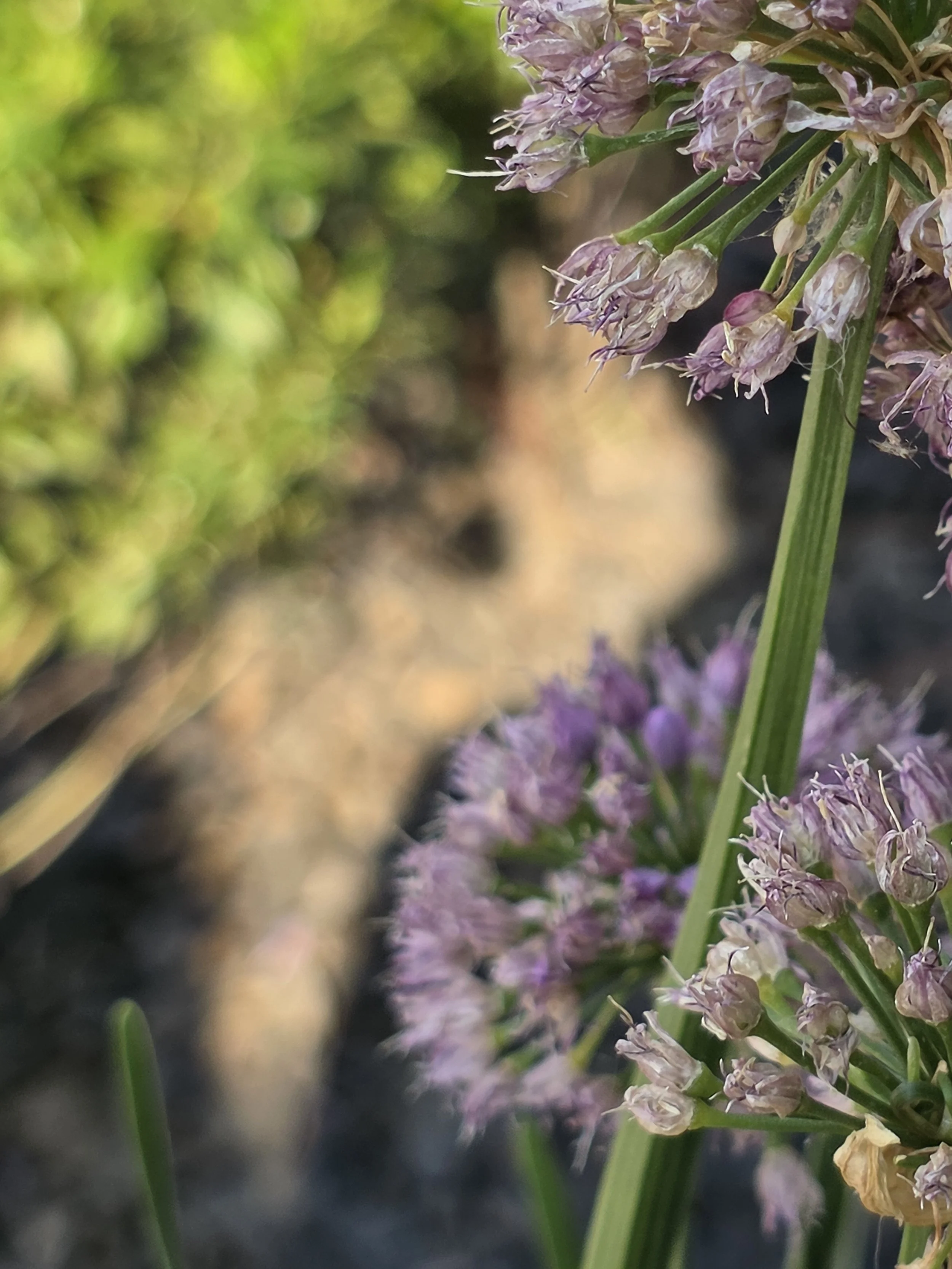
Already Summer is releasing her vitality. She bursts on the scene with color and smells that enchant and delight. And just when we begin to embrace her gifts, she fades like one who has given all to the cause of beauty. Life and death intertwined.
I agreed, for a season, to all of it.
The relentless picking and poking.
The steadfast belief that the unwanted things in me must die.
And so, I invested in the knowledge of what destroys—
unwanted cells and along with them
the wanted ones became casualties of war.
The carnage of body became carnage of mind.
I agreed to the suffering.
Believed my suffering could be used to somehow lighten the burden in someone else’s life.
I had mistaken the suffering for the summer blossoms that enrapture the heart. Rather, it is the dank soil that quietly incubates beneath the surface of our lives.
There is beauty in the hard moment. There is revelation there. There are things that can only be discovered when life has taken us underground.
This paradox—a life lived between beautiful and hard—it keeps me forever grateful.
And cultivates a kind of compassion that can only come from the “going through.”
But I no longer want to confuse what can grow in suffering with a reason to suffer. I no longer want to make sacred the thing from which something sacred emerged.
God can redeem suffering without requiring my allegiance to it.
Perhaps this is what revelation sometimes asks of us—
not that we defend what we once knew,
but that we become willing to know something more.
Somewhere along the way, I became very good at making suffering beautiful.
I could find the lesson.
The revelation.
The metaphor.
The Divine thread running straight through the hard thing.
And none of that was untrue.
But perhaps I had become so practiced at finding meaning in suffering that I had begun to assign suffering the meaning.
There is a difference.
I can see it now.
Some of us choose our suffering and in doing so we believe we can manipulate all of destiny’s power—
We suffer fools and endless days of same-old-thing routines.
We push.
We strive.
We angst over seemingly little things.
And sometimes we use our suffering to capture what we’ve not been able to ask for in a healthy way—We use our pain to retreat from the world.
We discover it’s the only way we know how to say no.
The only way to entitle ourselves to the time we need to recover and reconnect.
And we leverage our discomfort as an excuse to be short, blunt, angry, even bitter when the real cause is our inability to speak our truth.
So much of our suffering is self-induced.
Tell me, what unnecessary suffering are you going through?
“She was so long-suffering.”
Is this what memory I want my story to induce?
How long are you willing to suffer to get what you need?
We all go through things.
Most, invisible.
The suffering incremental.
The enduring unending, and often insurmountable.
But we are rebuildable, bendable, pliable.
And the best of us is never measured in this moment,
but in the collection of this one
and the next.
I once believed our suffering was not only intended for our own transformation but for the transformation of those looking on.
I am less certain of that now.
Not of transformation.
Of intention.
What if God was never asking us to become better at suffering?
What if suffering is neither the calling nor the destination?
What if it is simply the place where something can be revealed—
The dank soil,
not the blossom.
There is beauty in the hard moment.
There is danger in mistaking it for home.
Some who have read my story may have the impression that things [important, essential, worked-hard-for things] are being stripped away.
They may imagine fingers grasping for darkness in the middle of the night.
But I am anything but empty-handed.
From the outside looking in, life may feel like a disaster.
But from the inside, cells are exploding and multiplying at the speed of light.
And somewhere, in the sweet, juicy center of everything,
the suffering is being released.
Those words remain true.
Perhaps more true than when I first wrote them one year ago.
Because the story was never meant to end with suffering.
It ends with release.
Cells exploding.
Multiplying.
Life.
I don't want to become exceptional at suffering.
I don't want to build an identity around enduring.
I don't want to become so fluent in the language of what must die that I forget to speak to what wants to live.
I can honor what happened in the darkness without calling the darkness holy.
I can be grateful for what grew beneath the soil without believing the soil was the destination.
I can believe God met me there without believing He intended me to stay there.
The blossom does not deny the soil.
It is evidence that something happened there.
Something unseen.
Something holy.
Something alive.
After all these years of asking what must die,
there is another revelation waiting for me:
Perhaps healing isn't measured only by what is disappearing.
But by what is being born.
NOTES
Soul Map
And now—
look what has been born.
There is a subtle difference.
Survival asks us to notice what death did not take.
Birth asks us to turn toward what life is making next.
For a long time, I have understood healing through the language of destruction—
kill it.
starve it.
fight it.
eradicate it.
Some things do need to die.
But even necessary destruction can become an occupation.
We can become so consumed with tearing down what cannot remain that we forget to build what should.
A life cannot flourish on demolition alone.
At some point we have to turn from the rubble
and begin creating.
REFLECTION
What are you so busy trying to kill that you have forgotten how to flourish?
What are you fighting—
even necessarily—
that has become the organizing principle of your life?
If you gave less attention to what needs to die,
what would you suddenly have energy to bring to life?
What wants to be born in you now?
A belief?
A relationship?
A calling?
Joy?
Peace?
A different way of inhabiting your body?
What would change if healing were measured not only by what is disappearing—
but by what is appearing?
Not only by what you have overcome—
but by what you are building?
Not only—
Look what lived.
But—
Look what has been born.
You Are Here.
Maybe flourishing begins when we stop asking life to prove that we survived
and give it permission to become something we have never been before.
You are not alone.
Sometimes the words incubating in us are spoken in a language other than our own. May our fluency be in the one He uses—Janene Kraft, inspired by Summer’s flower.